The audit establishes what current pricing actually does before it is rebuilt: who receives different treatment, who pays more or less than the baseline, which inputs drive it, and whether customer explanations match the real logic.
What Should a Pricing Audit Check?
The logic is how the decision is made. The treatment is what it produces. Both need review.
Should Outcomes Be Reviewed by Group or by Individual?
Connecticut’s law reaches pricing differences applied to groups. An audit of individual prices can miss a pattern that appears only when outcomes are compared across groups.
What Should the Audit Produce?
An audit record of current decision logic, treatment differences and areas for legal or fairness review. Counsel then decides whether any difference raises concerns.
What Questions Should Every Pricing Audit Answer?
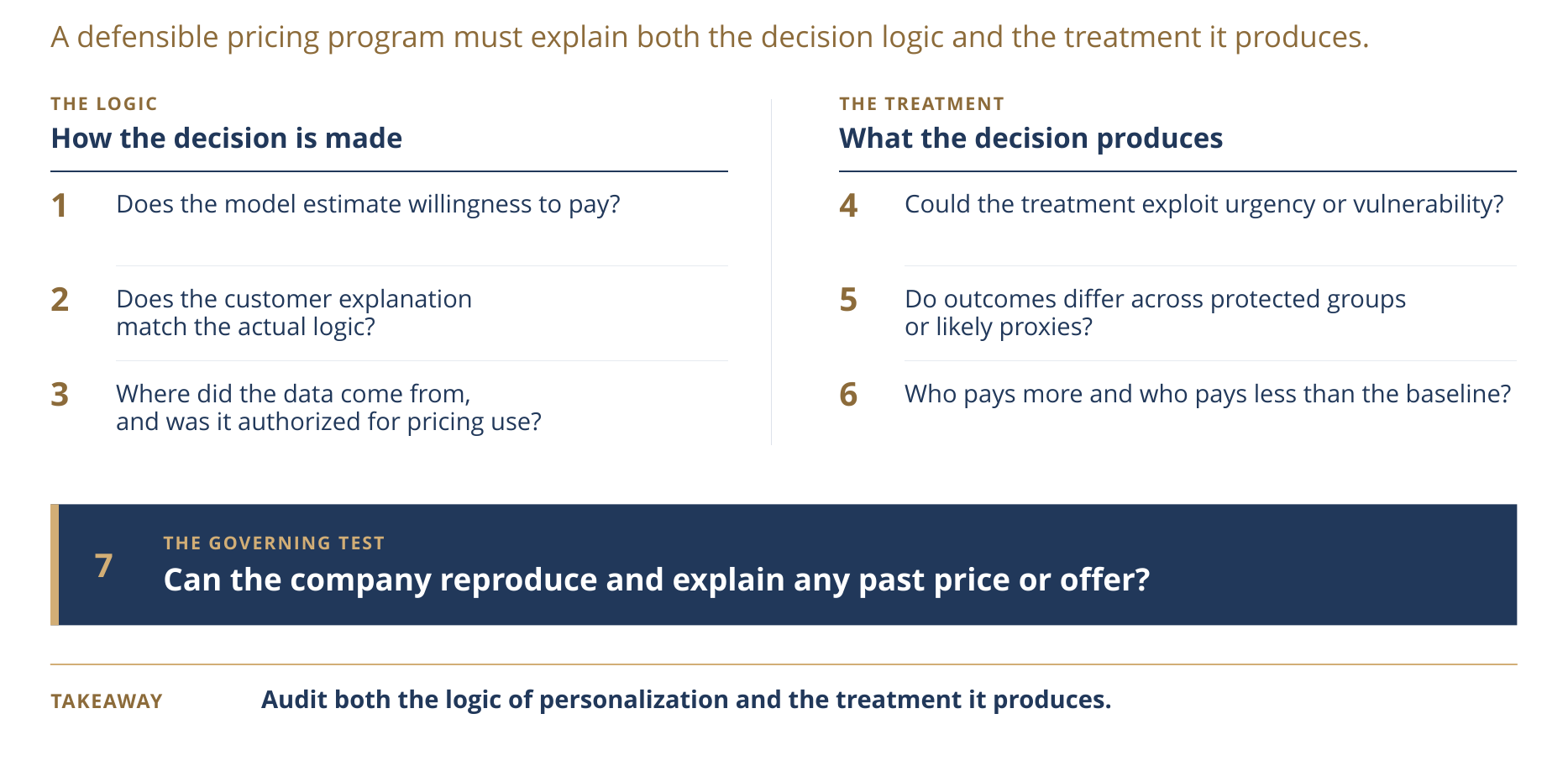
Seven audit questions: three on the decision logic, three on the treatment it produces, and the governing test of whether any past price can be reproduced and explained.
Which Laws Apply to Stage 2: Audit?
Maryland HB 895Maryland
HB 895 · Chapter 154 of 2026
Since October 1, 2026, Maryland bars large food retailers and third-party delivery services from using dynamic pricing or personal data to charge a consumer a higher price for tax-exempt food.
In ForceOct 1, 2026