Each segment is a versioned record: identifier, rule, data sources, treatment, disclosure text, effective date, version, owner and approval. To rebuild a specific past price, also keep the input values or a data snapshot reference, the model version, the jurisdiction rules applied, the disclosure shown and the timestamp.
How Should Pricing Rules Be Changed?
- Add a segment: write, test and approve a new rule; others stay as they are.
- Retire a segment: keep its record; its customers fall back to a default treatment.
- Change one rule: issue a new version with its own effective date.
- Roll back: restore one segment’s previous version and the model version in force with it.
How Does the Decision Record Support Governance?
In an opaque model, removing one input usually means retraining everything, and every price can shift. With modular segments, the scope of review matches the scope of the change.
One Record, Five Governance Functions
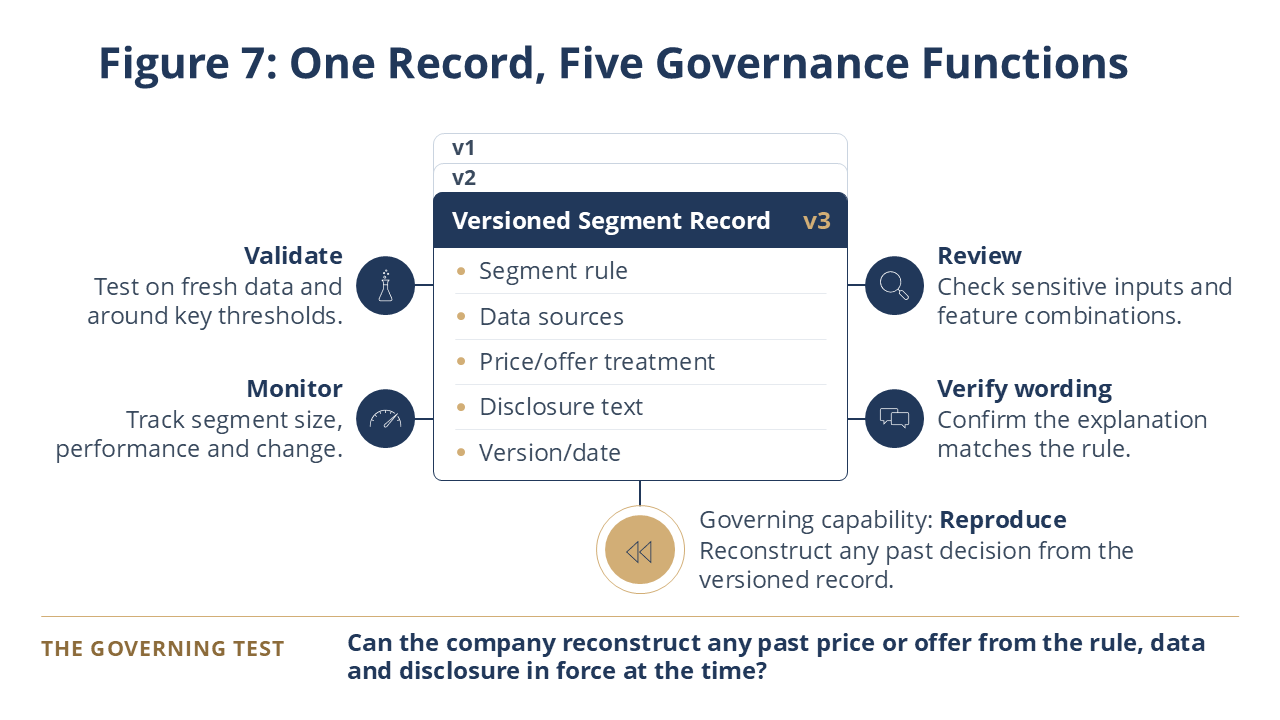
One versioned segment record supporting five governance functions.
Which Laws Apply to Stage 5: Govern?
Colorado Privacy Act Profiling Opt-OutColorado
C.R.S. § 6-1-1306(1)(a)(I)(C); 4 CCR 904-3, Rule 9.04
Colorado consumers can opt out of profiling used for decisions with legal or similarly significant effects, which include access to essential goods or services.
In ForceIn forceColorado SB 26-189Colorado
SB 26-189 (replaces the Colorado AI Act)
Colorado SB 26-189, signed May 14, 2026 and effective January 1, 2027, regulates automated decision-making technology used in consequential decisions about education, employment, housing, financial or lending services, insurance, health care and essential government services.
EnactedJan 1, 2027